

Simba & Bob:
Mobile and Humanoid AI Robotics
Two robotics prototypes, two fields of application: Simba handles mobile AI-powered monitoring of hard-to-monitor areas, while Bob explores new perspectives for humanoid robotics in the workplace of tomorrow.
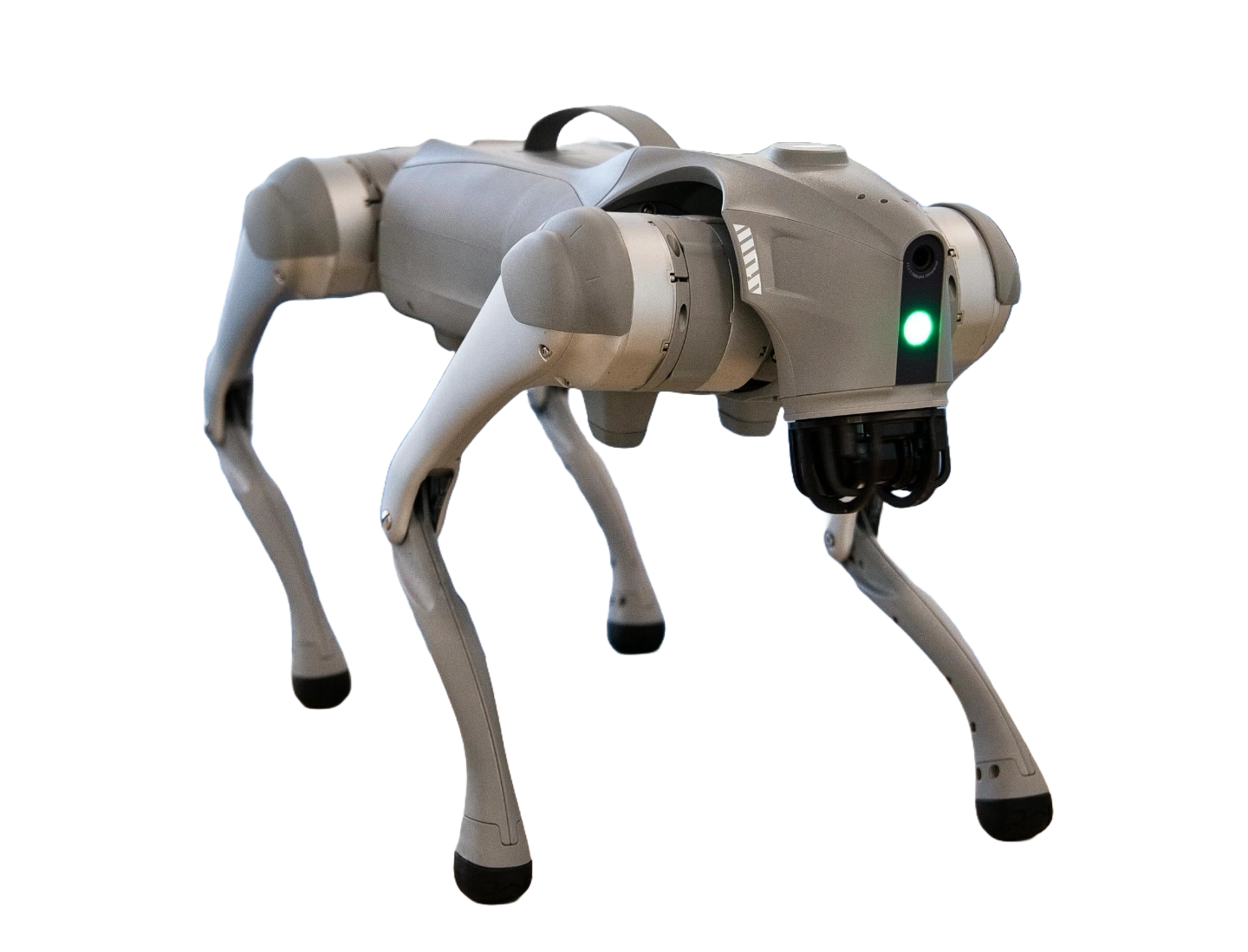
What Simba does.
Simba is a robotics prototype for AI-powered outdoor and production monitoring. It moves through defined areas, captures available sensor data – such as radar or image data – and makes it available to an AI model for analysis.
The model detects defined situations or deviations from the trained normal state – for example people on a site, blocked pathways, fallen objects, or unusual situations in a production environment. When a relevant deviation is detected, a signal can be triggered automatically – for example to a reporting point, a security team, or a designated contact.
This allows companies to monitor areas that are difficult or impossible to cover fully with fixed cameras – such as expansive outdoor areas, complex production environments, or temporarily critical zones.
See the prototype live.
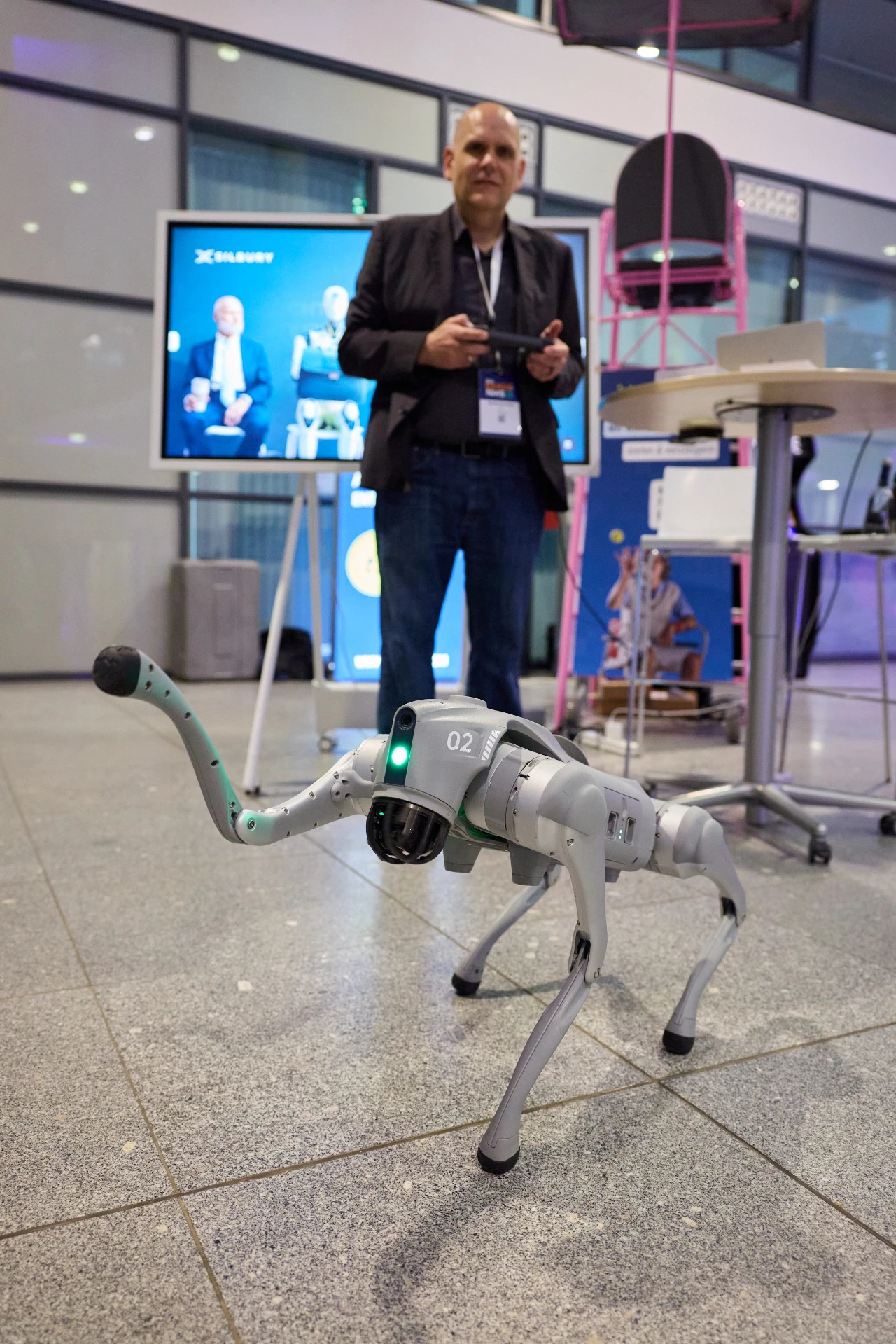
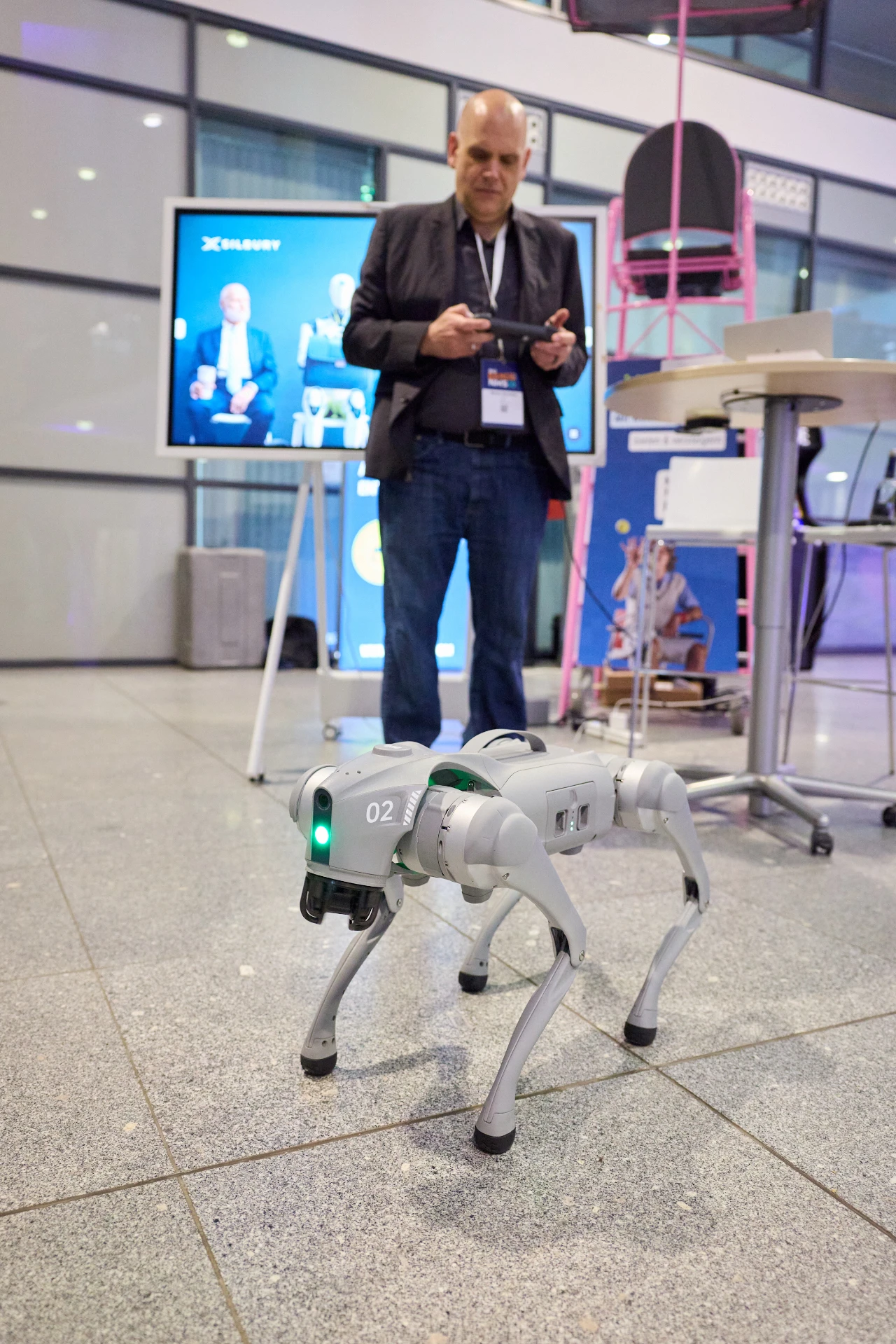
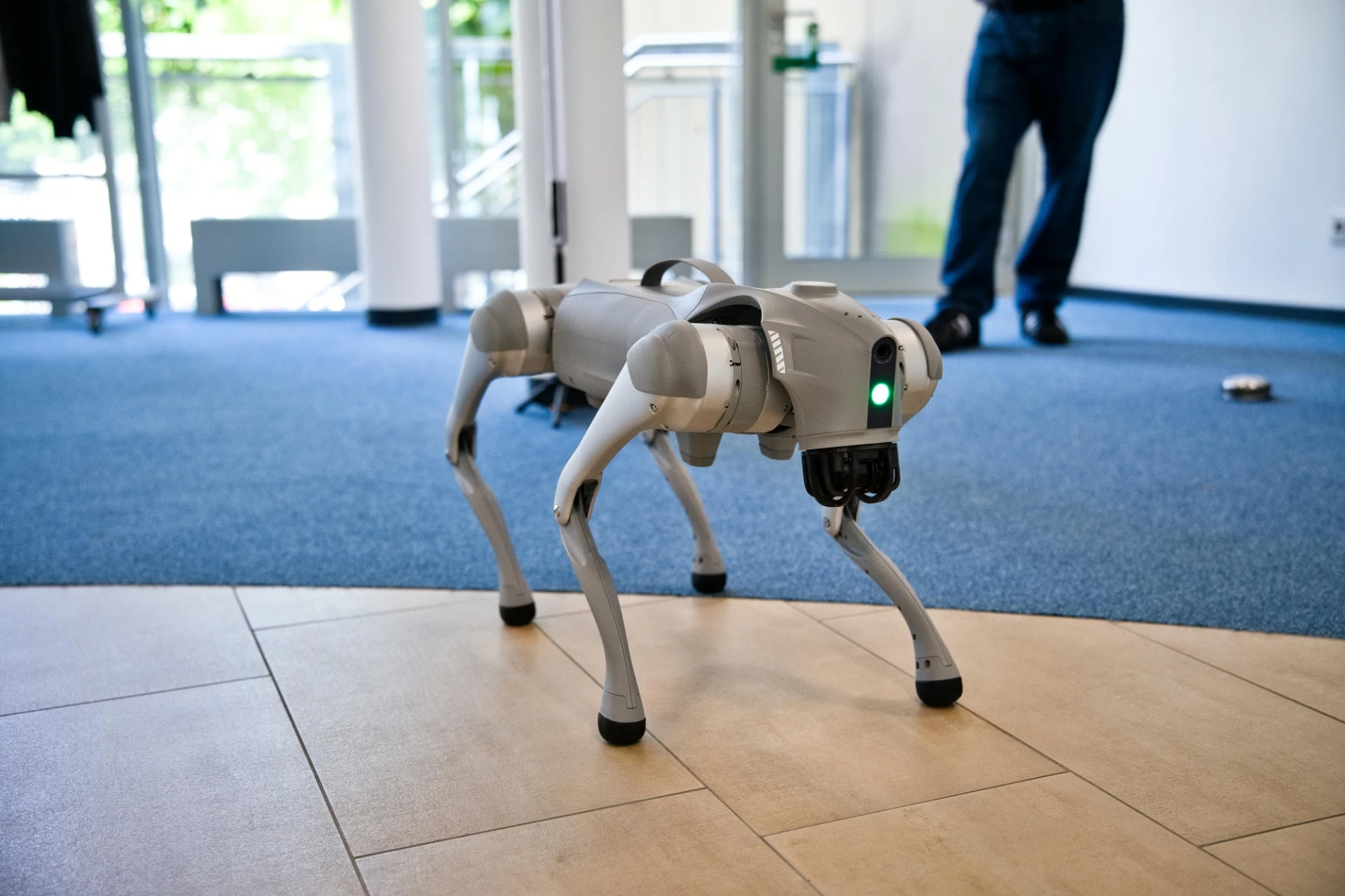
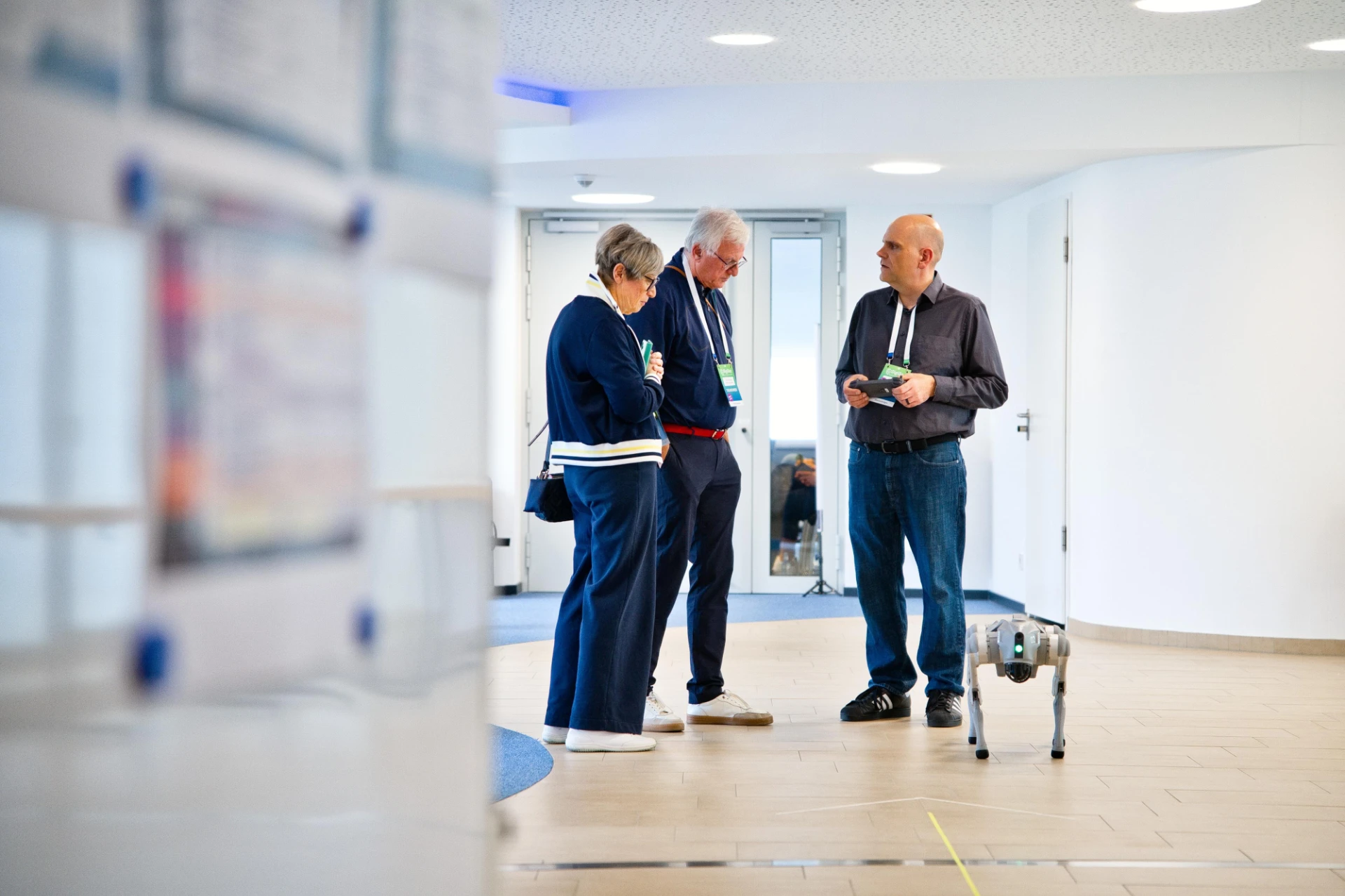
Two application areas, one principle.
Whether outdoors or in production – Simba captures, analyzes, and reports relevant deviations wherever fixed cameras reach their limits.
Outdoor Monitoring
Simba can be deployed to monitor expansive or hard-to-see areas of a site.
Examples- Is a person on the premises?
- Is there movement in a defined area?
- Are there indications of an unusual situation?
- Does a security team need to be notified?
Benefit: Mobile monitoring can help wherever fixed cameras reach their limits – for example with large areas, complex layouts, or changing checkpoints.
Production Monitoring
In production environments, Simba can help detect anomalies during ongoing operations.
Examples- Is something blocking the way?
- Has something fallen?
- Is an object or component missing?
- Is something not functioning?
- Does a situation deviate from the normal process?
Benefit: Anomalies can be detected faster and passed on to the responsible people – before they disrupt processes or create risks.
From sensor data to actionable signals.
Capture
Simba moves through defined areas and collects available sensor data.
Analyze
The data is analyzed by an AI model.
Detect
The AI checks whether defined objects, people, or deviations from the normal state are present.
Respond
When relevant events occur, a signal can be triggered – for example a notification, a call, or forwarding to a control center.
Why mobile AI robotics?
- Greater visibility in hard-to-monitor areas
- Flexible monitoring of large or complex areas
- Detection of deviations from the normal state
- Support for security and production teams
- Faster response to relevant events
- Combining robotics, sensor technology, and AI analysis
- An alternative or complement to fixed cameras
Bob: Humanoid Robotics for the Workplace of Tomorrow.
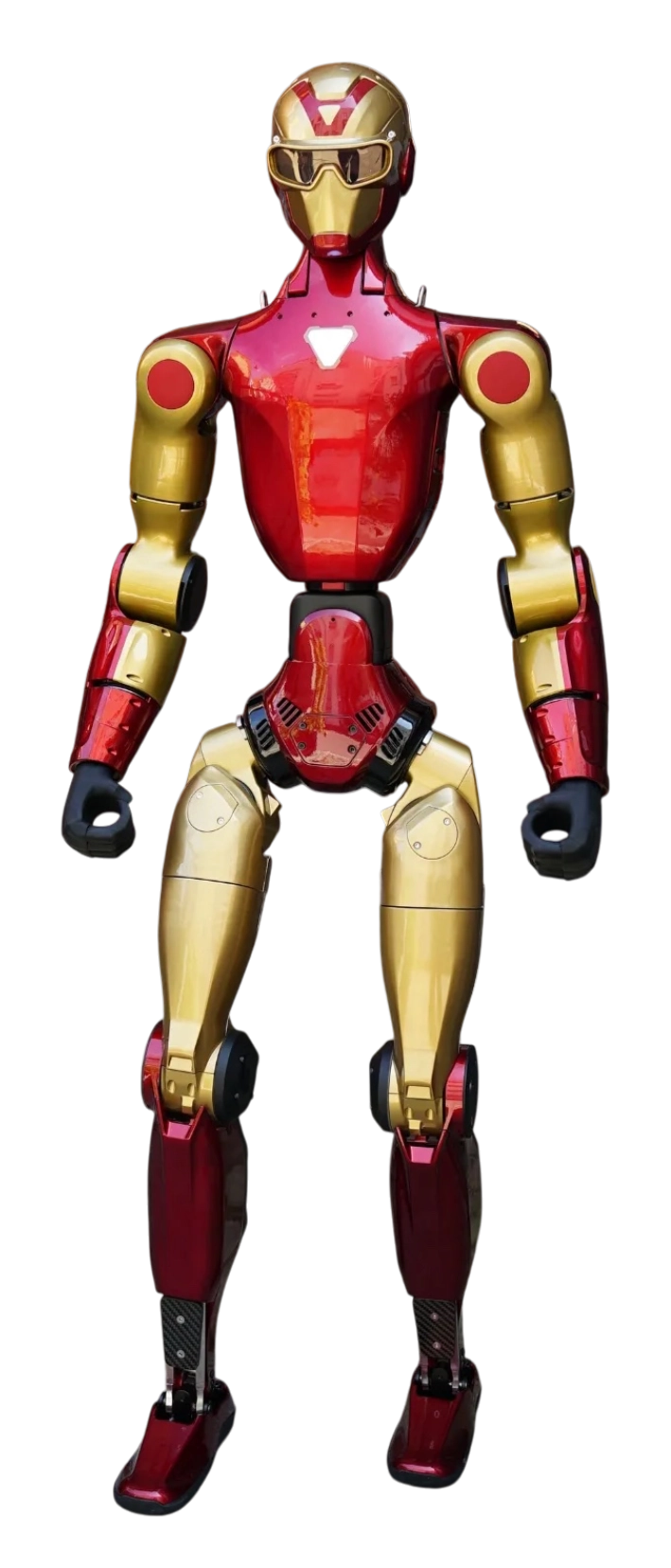
Bob is Silbury's humanoid robotics prototype. While Simba supports scenarios that call for mobile sensor technology and AI-powered monitoring, Bob opens up new perspectives for tasks in human-designed work environments.
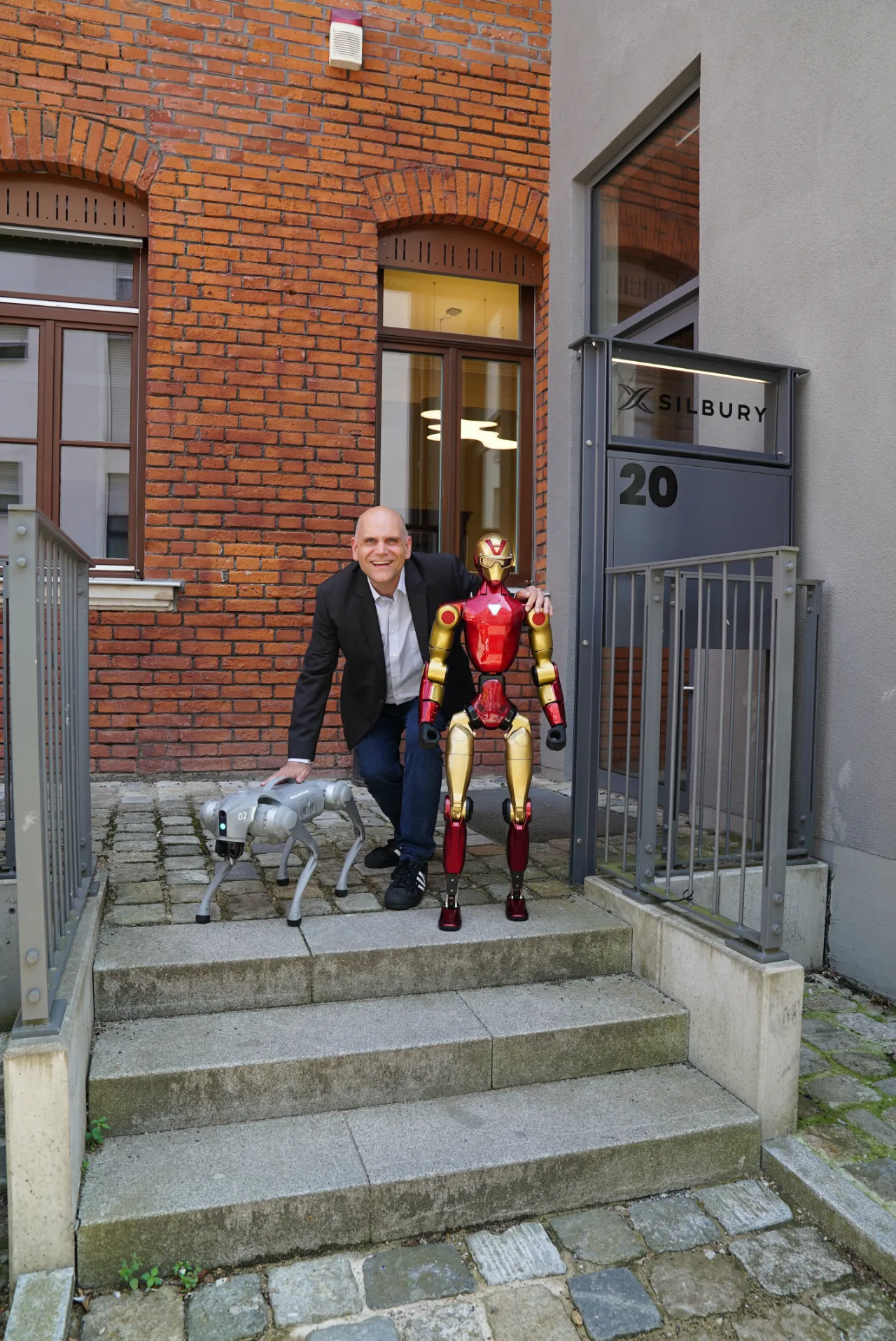
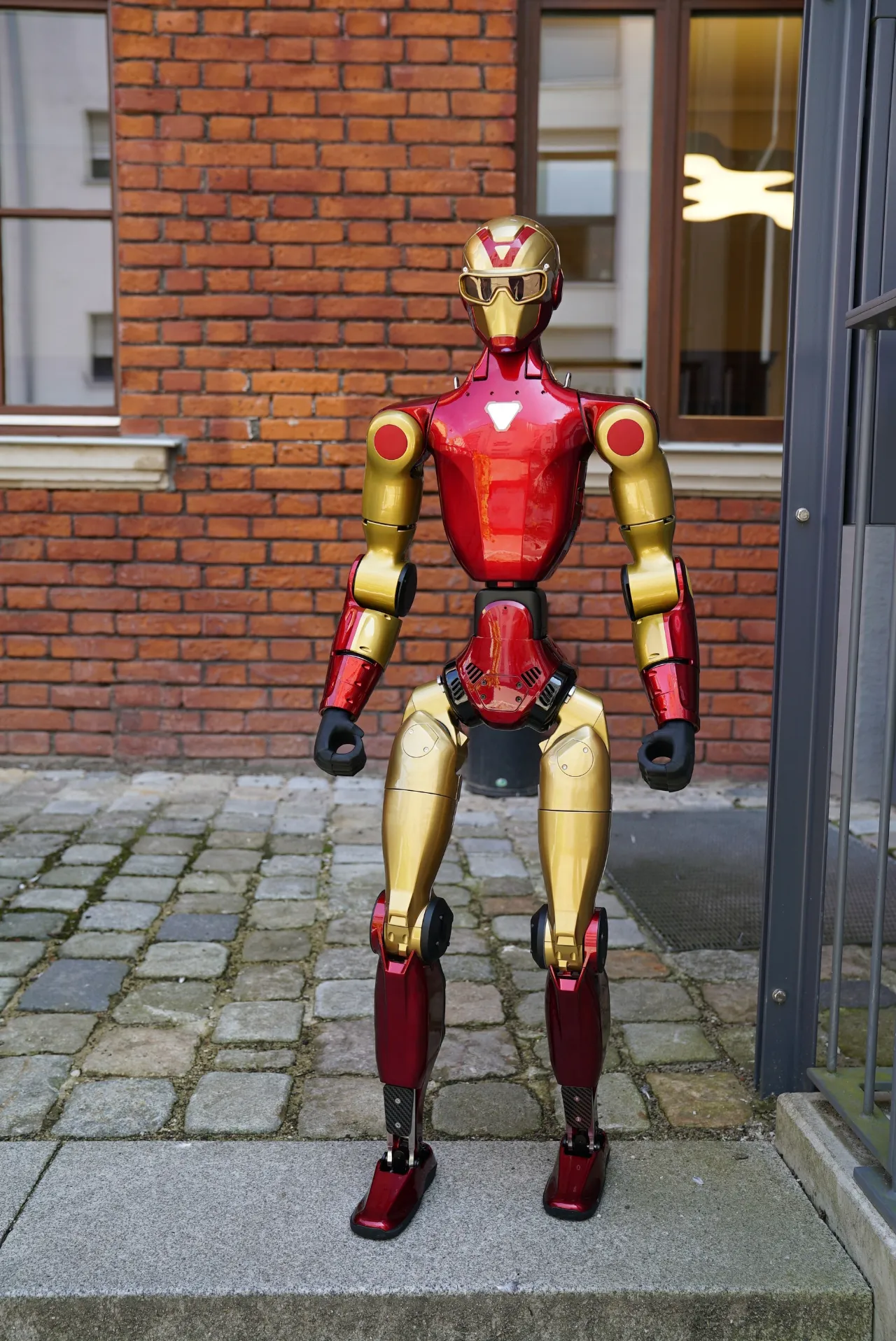
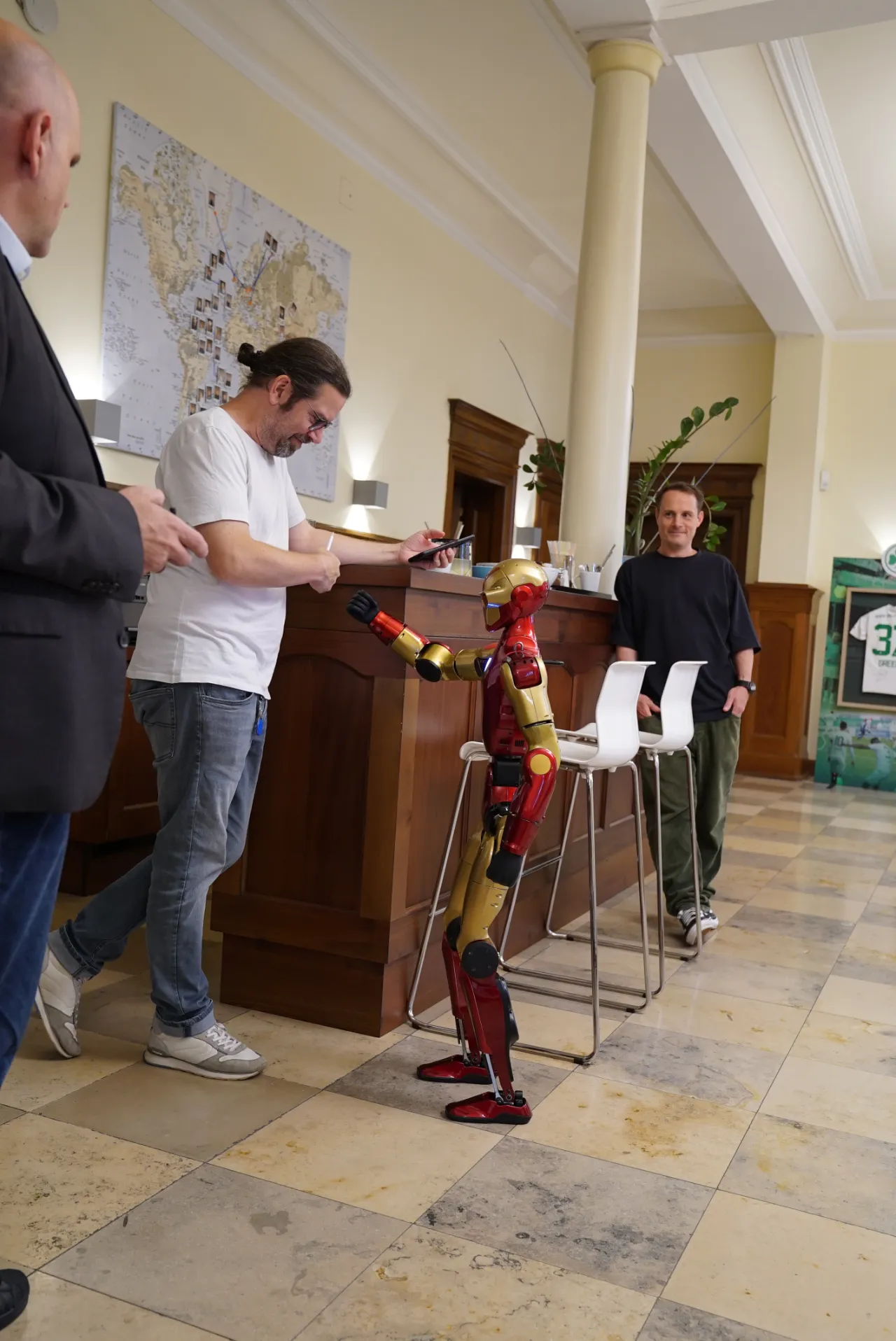
Humanoid robotics can, in the future, provide support wherever paths, tools, and workplaces are designed for people. What matters is not the robot alone, but the combination of movement, sensor technology, AI, and a clearly defined use case.
With Bob, Silbury tests how humanoid robotics can be meaningfully integrated into business processes – practically, safely, and with a focus on concrete value. This isn't about technology for its own sake, but about the question: which tasks can people meaningfully offload to intelligent assistance systems in the future?
Bob makes this development tangible and helps companies understand the potential, limits, and requirements of humanoid AI robotics together with Silbury.
Why Is Our Humanoid Robot Called Bob?
The name is a small nod to Terminator 2: Arnold Schwarzenegger's character is initially only known by his model designation. As he evolves over the course of the film from a threatening-looking cyborg into a protector and more human companion, he earns the nickname “Uncle Bob.”
That's why our humanoid robot is called Bob: he's meant to make technology feel approachable and tangible rather than distant or threatening. We want to open up the dialogue and show how robotics can be used responsibly, practically, and for the benefit of people and companies.

Want to find out if mobile AI robotics makes sense for your company?
We help companies develop AI and robotics applications from idea to prototype to implementation – with a focus on concrete use cases, technical feasibility, and economic value. Feel free to contact us or schedule an AI strategy call.